Beyond COP30 summit
N°14 - December 2025

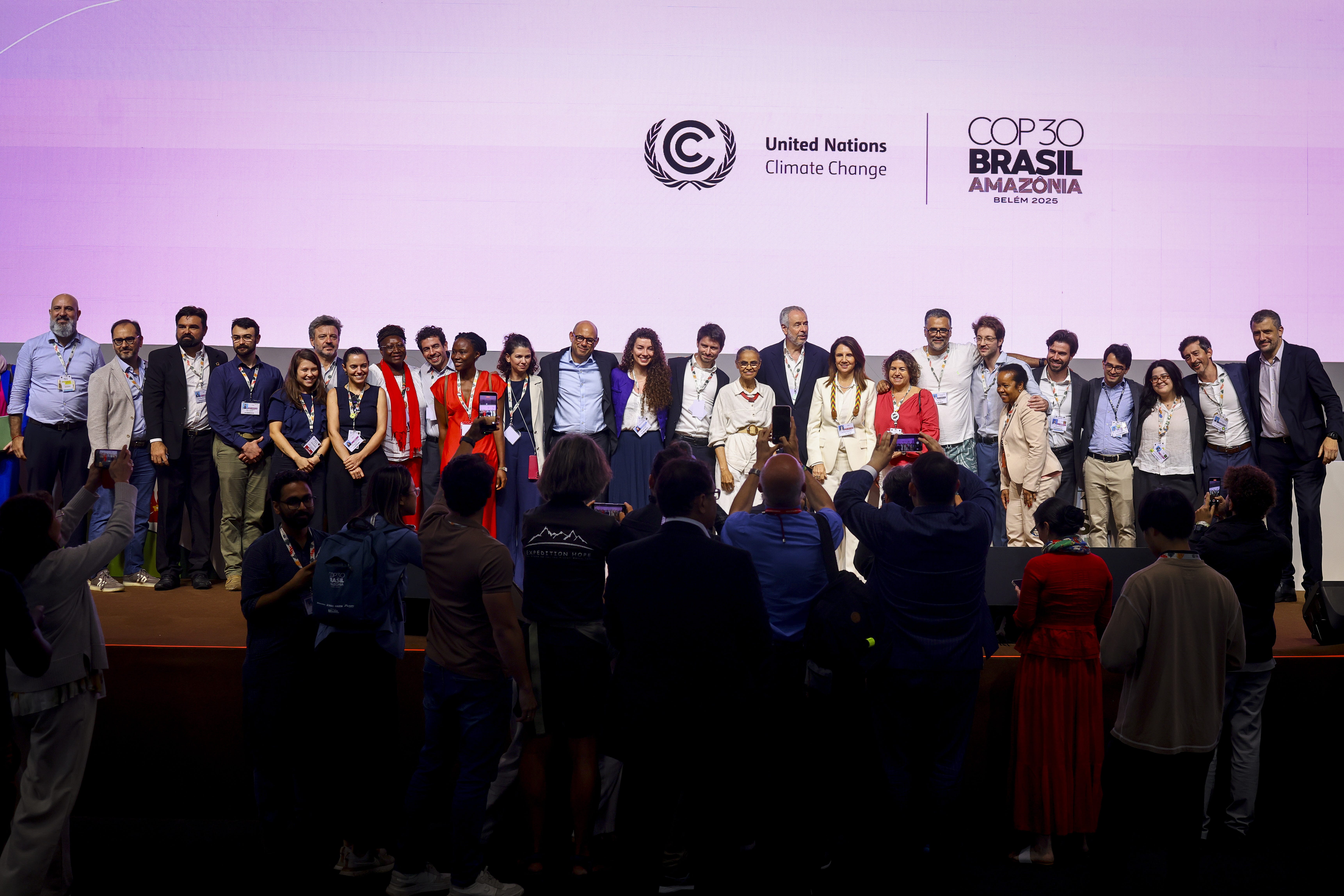
As COP30 concludes in Belém, this edition examines what happens when pledges meet implementation.
Tim McDonnell argues the summit’s modest outcomes mask functional progress with Brazil delivering implementation frameworks, whilst Renaud Bettin observes COP30’s value as a harmonisation platform. Rebecca Geldard reports blended finance operationalisation through FINI and Mission 300 initiatives.
Accountability emerges as new frontier. Le Monde reports Thai Prime Minister publicly apologising for flood deaths killing 467, marking climate disasters unlocking political responsibility. Anouk Passelac profiles Marcele Oliveira arguing climate decisions exclude those most affected by environmental racism.
Infrastructure reveals what works. Jean-Baptiste Fressoz shows China’s high-speed rail saved more oil daily than all global electric vehicles combined, transporting 3.4 billion passengers whilst dividing emissions by one hundred. Greg Iacurci reports AI data centres drive US electricity prices up 7.4% as households subsidise expansion, raising governance questions.
John Stamer and Linda Yao argue data centre sustainability requires holistic approach as consumption doubles by 2030. Anna Kaplan reports FOFO medical avoidance, questioning whether similar patterns apply to climate data. Olivier Mathiot argues investors now demand proven unit economics over growth narratives.
We hope this curation will drive your own reflections and actions. Please feel free to share it with those who might be interested.
Let’s dive in! 💫
Insights
Olivier Mathiot 🇫🇷 argues founders must shift from growth-first narratives to credible unit economics, as tighter funding cycles demand business plans anchored in repeatability before scale. Field research with ten entrepreneurs shows investors now expect proven CAC/LTV ratios from real cohorts, visible margin trajectories, and operational AI leverage rather than deck promises, whilst boards should function as crews with direct manager involvement and fast-flowing bad news, as 2026 rewards truth and control over speed and storytelling in a market Eric Carreel describes as “sale first, then scale” rather than “quit-or-double”. | 2050 - BUSINESS PLAN
Rebecca Geldard 🇬🇧 reports COP30’s Belém Package and G20’s Johannesburg Declaration operationalise blended finance structures combining public and private funds, launching FINI initiative targeting $1T project pipeline by 2028 for adaptation infrastructure and Mission 300 aims to connect 300 million people to electricity through private microgrids, as focus shifts towards grid infrastructure with utilities raising energy transition commitments 25% to nearly $150B. | World Economic Forum - CLIMATE FINANCE
Renaud Bettin 🇫🇷 argues COP30’s value extends beyond minimal climate accord to serve as essential harmonisation platform for NGOs, companies, and international organisations. Sweep VP Climate Action observes businesses demonstrated direct economic dependence on nature whilst fossil fuel participation remains necessary as 80% of global energy requires their transition investment representing hundreds of billions, with carbon market harmonisation and Climate Contribution Framework emerging as major themes to simplify corporate climate action by connecting measurement tools with concrete commitments. | Sweep - COP30

Tim McDonnell 🇺🇸 argues COP30’s modest outcomes mask functional progress, as Brazil’s implementation accelerator and transition roadmap effectively deliver what Europe demanded whilst maintaining consensus across polarised nations. Semafor’s climate editor notes the summit’s survival itself signals governments’ persistent engagement despite US withdrawal, whilst emphasising COPs run parallel to real economy decisions in legislatures and boardrooms where China’s clean energy dominance strategy continues regardless of diplomatic language, making fossil fuel phase-out inevitable even without explicit negotiated mandates as economics shift independently of conference outcomes. | Semafor - COP30
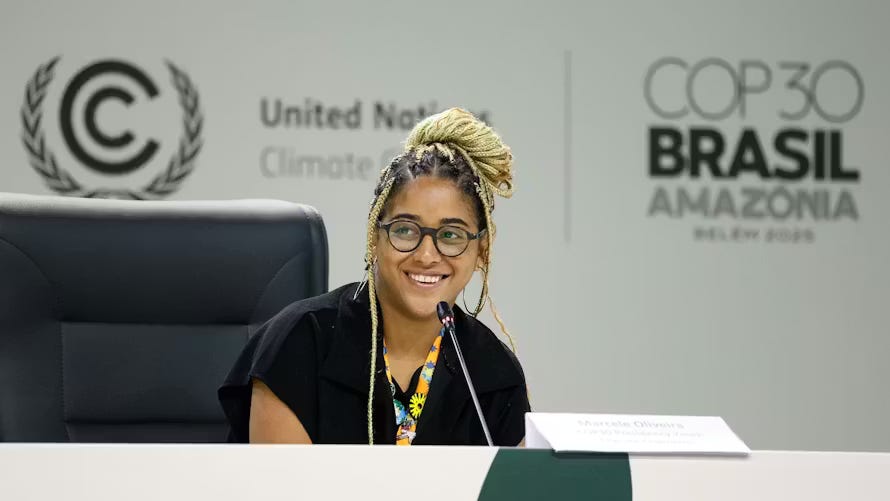
Anouk Passelac 🇫🇷 reports Marcele Oliveira argues as COP30 Youth Champion that climate decisions exclude those most affected by environmental racism, with poor communities facing disproportionate injustices. The 26-year-old Rio favela activist mobilised neighbours to secure a park after discovering green spaces abundant elsewhere whilst her neighbourhood remained abandoned, emphasising the “Mutirão” collective work concept where youth voices create pressure for change, though COP decision-makers lack practical knowledge whilst inventing sustainability solutions disconnected from frontline community needs. | We Demain - COP30
Le Monde with AFP 🇫🇷 reports Southeast Asian floods killing 467 people trigger unprecedented government accountability, with Thai Prime Minister Anutin Charnvirakul publicly apologising for letting disaster occur under his watch whilst offering up to $62,000 compensation per family. Le Monde analysis shows mounting public anger led to suspension of two local officials for alleged failures in Thailand’s Songkhla province where waters rose to 3 metres, as Indonesia records over 300 deaths with 270 missing on Sumatra island, marking a shift where climate disasters unlock new political responsibility for states as scientists warn atmosphere holds 7% more moisture per degree of warming. | Le Monde - CLIMATE - State Accountability
Jean-Baptiste Fressoz 🇫🇷 argues China’s high-speed rail network saved 1.5 million barrels of oil daily in 2024 whilst global electric vehicles combined saved less, as International Energy Agency’s World Energy Outlook reveals. Le Monde analysis shows China built 40,000 kilometres of lines since 2008 connecting cities over 500,000 inhabitants, transporting 3.4 billion passengers versus France’s 120 million, dividing emissions by one hundred compared to petrol cars and by eighty versus planes despite carbon-heavy electricity mix, whilst electric vehicles only halve emissions per kilometre as Norwegian lifecycle analysis shows, with Central Europe importing old German cars extending fleet renewal from 28 to 44 years since 2000. | Le Monde - TRANSPORT
Greg Iacurci 🇺🇸 reports AI data centres drive US household electricity prices up 7.4% as projected demand reaches 6.7-12% of total electricity by 2028. CNBC analysis shows households subsidise AI expansion through infrastructure costs whilst average overdue utility balances rose 32% since 2022, raising questions about collective AI governance as citizens fund technology through rising bills yet lack voice in shaping its development towards public benefit rather than solely corporate profit. | CNBC - AI
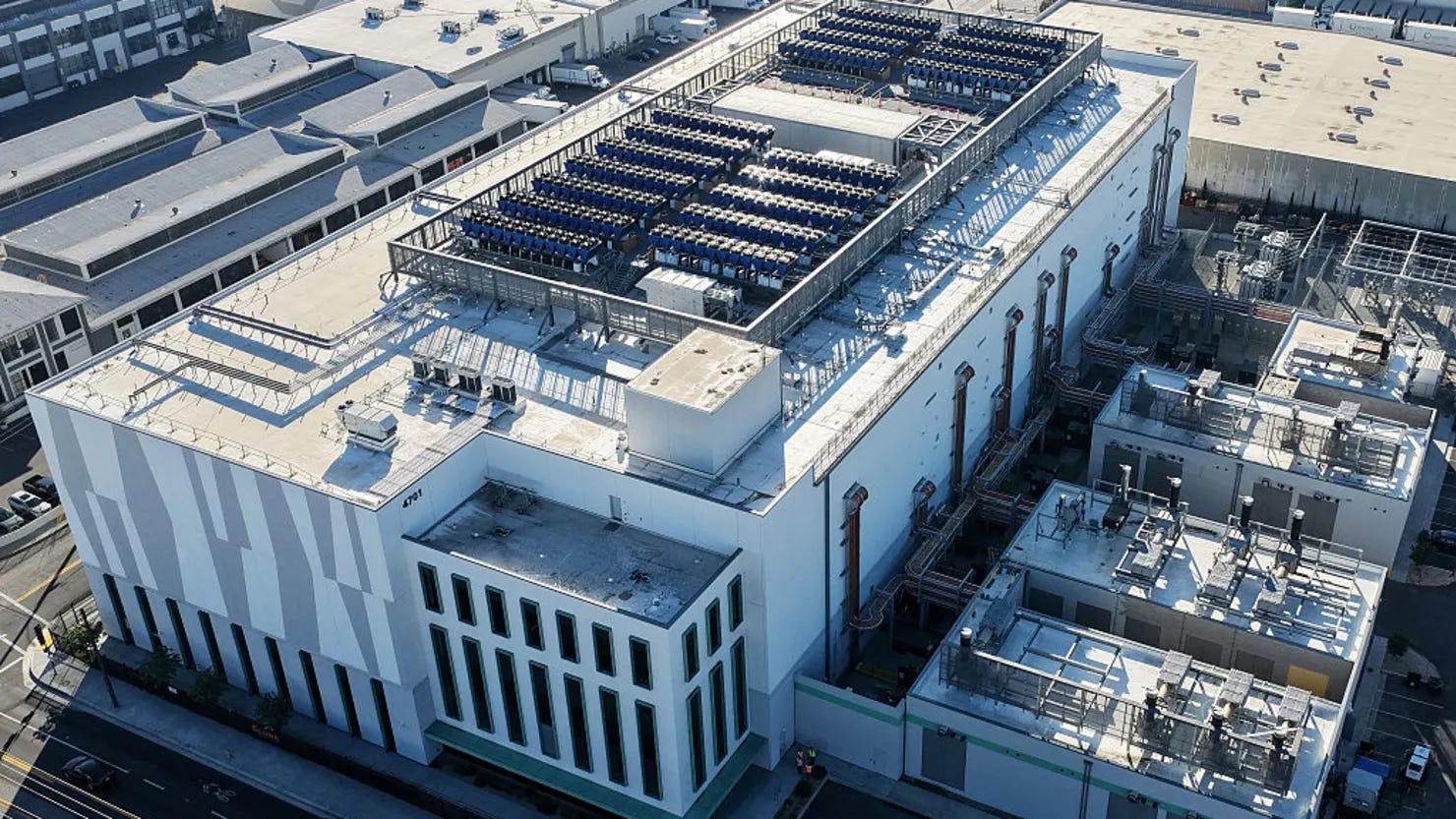
John Stamer & Linda Yao 🇺🇸 argue data centre sustainability requires holistic approach beyond energy alone, as International Energy Agency reports global consumption doubling to 945 terawatt-hours by 2030. World Economic Forum analysis identifies workload optimisation offering greatest potential to cut demand through consolidating tasks, whilst facilities at 1.1 power usage effectiveness use 84% less overhead energy than norm, as average data centre consumes 300,000 gallons water daily with 62 million tonnes annual e-waste requiring circular economy principles to recover critical minerals. | World Economic Forum - DATA CENTRE
Anna Kaplan 🇫🇷 reports FOFO (Fear Of Finding Out) drives 3 in 5 American workers to avoid medical screenings due to anxiety about discovering bad news. The analysis shows the phenomenon operates on logic that “if you don’t take the test, the result doesn’t exist,” with psychologist Lynn Bufka explaining avoidance stems from anxiety around uncertain situations, raising questions whether similar patterns apply to climate data where individuals and organisations defer confronting uncomfortable environmental realities despite long-term risks outweighing short-term comfort of ignorance. | GQ - FOFO
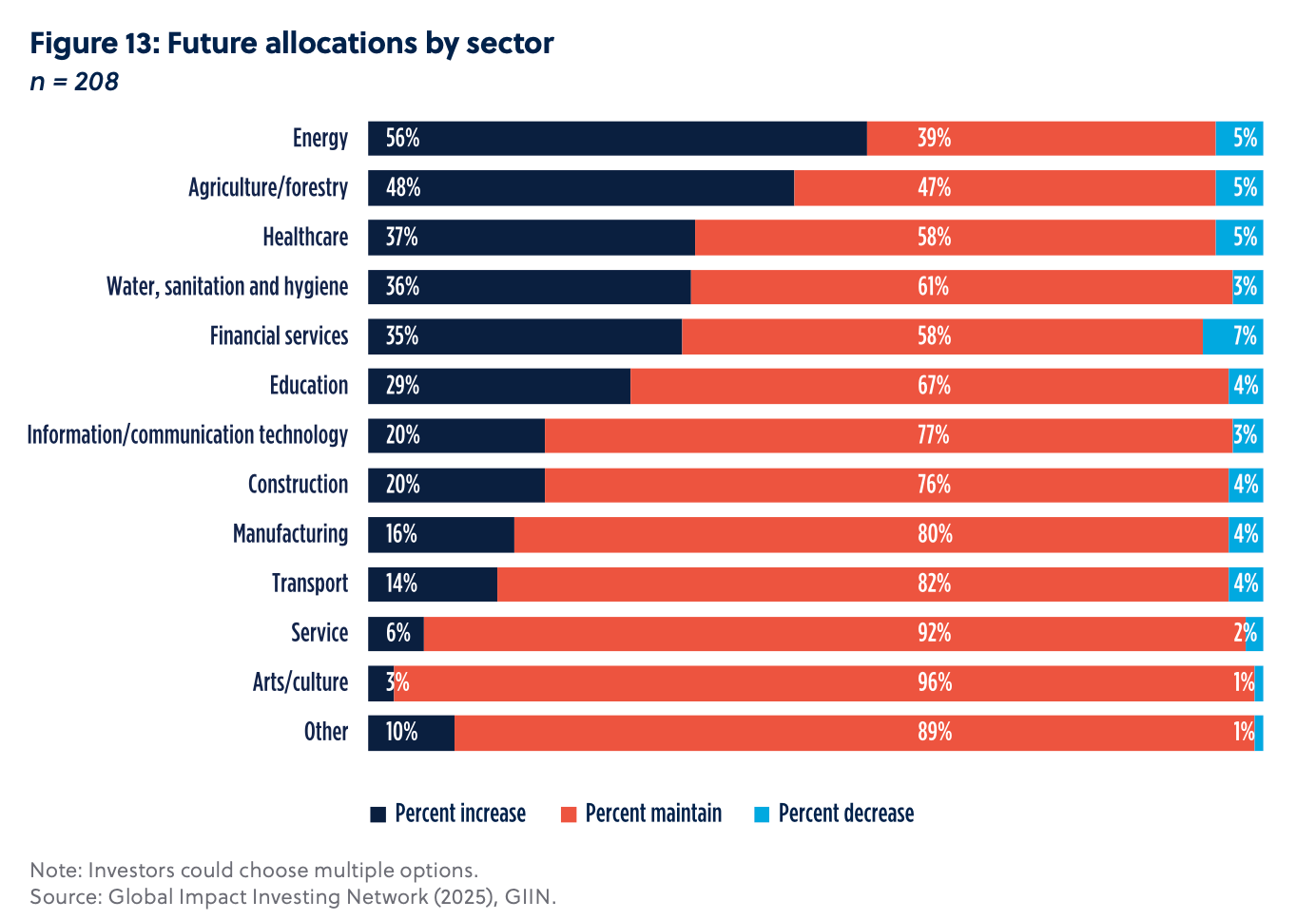
Graph of the week
This year’s GIIN Impact Investor Survey paints a clear picture: despite global headwinds, the impact investing market continues to grow. Impact AUM has increased at a compound annual growth rate of 21% over the past six years with an 11% increase in the past year — a signal of enduring confidence in our market. Source.